



Bcl-B
Bcl-B (BCL2L10) is an atypical anti-apoptotic member of the BCL-2 family that primarily regulates mitochondrial apoptosis through selective interactions with pro-apoptotic proteins and intracellular survival pathways[1][2]. Mechanistically, Bcl-B localizes mainly to the outer mitochondrial membrane, where it suppresses apoptosis by binding Bax, limiting mitochondrial outer membrane permeabilization and downstream caspase activation[1][3]. Beyond canonical apoptosis control, Bcl-B also participates in autophagy, mitophagy, and Ca2+ signaling regulation through interactions with Beclin 1, Parkin, and the inositol 1,4,5-trisphosphate receptor (IP3R), linking mitochondrial homeostasis to cell survival programs[1]. In disease models, dysregulated BCL2L10 expression has been reported in multiple malignancies, including melanoma, breast cancer, hepatocellular carcinoma, and hematologic cancers, where its biological role appears highly context dependent[1][4]. In melanoma, BCL2L10 functions as a pro-survival factor that promotes resistance to cytotoxic agents and BCL-2 family-targeted therapies, supporting tumor cell survival under therapeutic stress[4]. Compared with related anti-apoptotic isoforms such as BCL-2, BCL-xL, and MCL-1, Bcl-B exhibits a more restricted interaction profile, selectively binding Bax while showing limited interaction with several other BCL-2 family proteins, highlighting a distinct regulatory mechanism within the family[1]. For experimental applications, the unique interaction network, context-dependent oncogenic activity, and potential sensitivity to proteasomal regulation have positioned Bcl-B as a candidate target for studies investigating apoptosis resistance and therapeutic response in cancer models[1][4].
References:
- [1]. Pervushin NV, et al. Bcl-B: an \"unknown\" protein of the Bcl-2 family. Biol Direct. 2023 Oct 30;18(1):69. [Content Brief]
- [2]. Warren CFA, et al. BCL-2 family isoforms in apoptosis and cancer. Cell Death Dis. 2019 Feb 21;10(3):177. [Content Brief]
- [3]. Beverly LJ, et al. Ubiquitination, localization, and stability of an anti-apoptotic BCL2-like protein, BCL2L10/BCLb, are regulated by Ubiquilin1. Proc Natl Acad Sci U S A. 2012 Jan 17;109(3):E119-26. [Content Brief]
- [4]. Quezada MJ, et al. BCL2L10 Is Overexpressed in Melanoma Downstream of STAT3 and Promotes Cisplatin and ABT-737 Resistance. Cancers (Basel). 2020 Dec 30;13(1):78. [Content Brief]
All Product Categories
-
Bcl-B Related Products (6)
Related Products (6)

-
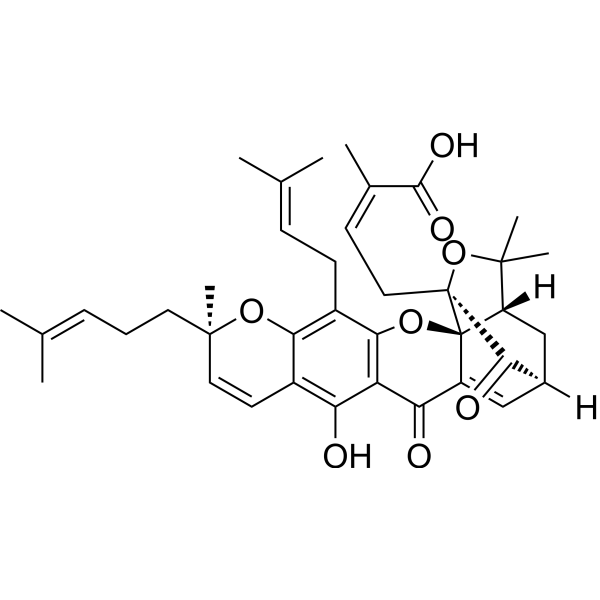
ABT-737
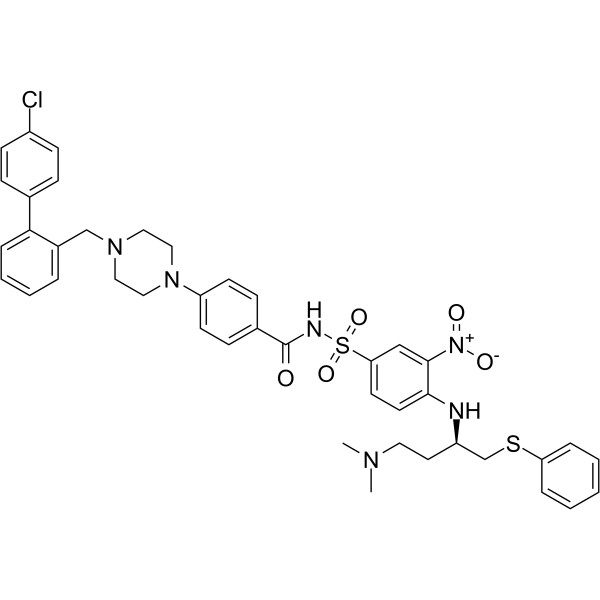 0 ImagesABT-737, a BH3 mimetic, is a potent Bcl-2, Bcl-xL and Bcl-w inhibitor with EC50s of 30.3 nM, 78.7 nM, and 197.8 nM, respectively. ABT-737 induces the disruption of the BCL-2/BAX complex and BAK-dependent but BIM-independent activation of the intrinsic apoptotic pathway. ABT-737 induces autophagy and has the potential for acute myeloid leukemia (AML) research.
-
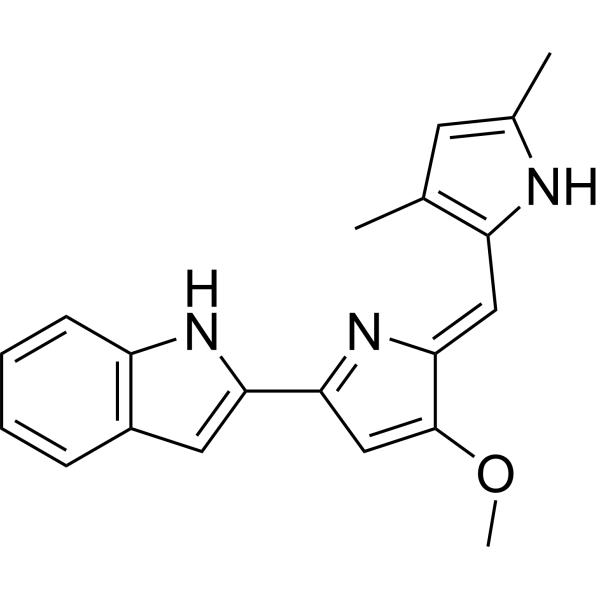
Obatoclax Mesylate
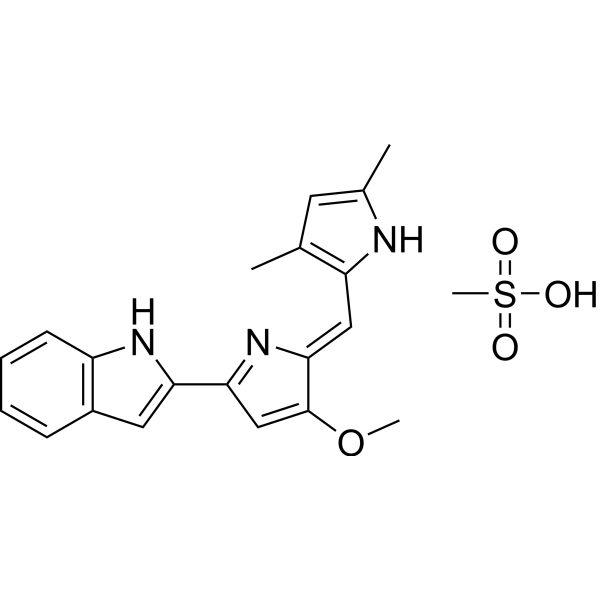 0 ImagesSynonyms: GX15-070 MesylateObatoclax Mesylate (GX15-070 Mesylate), a BH3 mimetic, is a pan-BCL-2 family proteins inhibitor with a Ki of 220 nM for BCL-2. Obatoclax Mesylate induces autophagy-dependent cell death and targets cyclin D1 for proteasomal degradation. Obatoclax Mesylate has anti-cancer and broad-spectrum antiparasitic activity.
-
A-371191
 0 ImagesCat. No.: HY-122275CAS No.: 406228-58-8A-371191 is a selective Bcl-XL antagonist with a Ki <0.5 μM, and also acts as a mitochondria-targeting agent and chemosensitizer. A-371191 restores the sensitivity of cancer cells overexpressing Bcl-XL to Cisplatin (HY-17394) and Doxorubicin (HY-15142A). A-371191 reduces tumor volume in mice with intraperitoneal tumors. A-371191 can be used in the research of acute myeloid leukemia.
-
WAY-605337
 0 ImagesCat. No.: HY-128230CAS No.: 485362-61-6Synonyms: MLS-0073383WAY-605337 (MLS-0073383) is a Bcl-B inhibitor, which can be used for structural modification and optimization of scaffolds.



